

If you've found yourself saying "be careful" roughly forty times in a single afternoon at the park, you're definitely not alone. But here's the thing, the research on risky play is pretty clear, and it might just change how you feel about watching your kid scramble up a tree or leap off something slightly higher than you'd like. Risky play isn't about throwing caution to the wind. It's about understanding that a bit of managed challenge is genuinely one of the best things for your child's development. Here's why, and how we make it part of everyday life at Aussie Kindies.
First up - risky play isn't dangerous play
Before anything else, let's clear this up. Play Australia's Risky Play Position Statement puts it plainly: risky play is not unsafe play. It may involve some risk of minor injury, but it does not involve hazards that cause serious harm.
Risky play is climbing, running fast, rough-and-tumble with friends, balancing on logs, digging deep holes, using real tools with supervision, exploring in nature, playing in spaces where an adult isn't right beside you. It's play where the outcome isn't guaranteed, where your child has to make decisions, judge their own abilities, and sometimes find out the hard way that they misjudged something. That's actually the point.
Children without developmental issues generally have a pretty good inbuilt sense of what they can and can't handle. In situations that are truly beyond them, they'll reach out for help. Our job as educators and parents is to create the conditions for challenge, not to remove it.
What the research actually says
The evidence for risky play is solid and consistent, and it comes from researchers all around the world including right here in Australia.
Research links risky play to risk-assessment skills, increased physical activity and wellbeing, and stronger social competencies and resilience. It builds physical strength, coordination and balance. It drives problem-solving and decision-making. And it helps children learn to manage fear, anxiety and stress, building emotional resilience and self-confidence in the process.
One study measured the impact of risky play in early learning settings with two-to-five-year-olds and found impressive results: decreased anxiety and antisocial behaviour, more independent and prosocial play, improved self-regulation, creativity, focus and confidence, and fewer injuries, not more. That last one surprises a lot of parents. But it makes sense: kids who get to practise reading and managing risk regularly get better at it.
The research also shows that the benefits of risky play don't stop at childhood, they carry through into adult life. Getting comfortable with challenge early on turns out to be a genuinely long-term investment.
The outdoor, nature-led heart of what we do
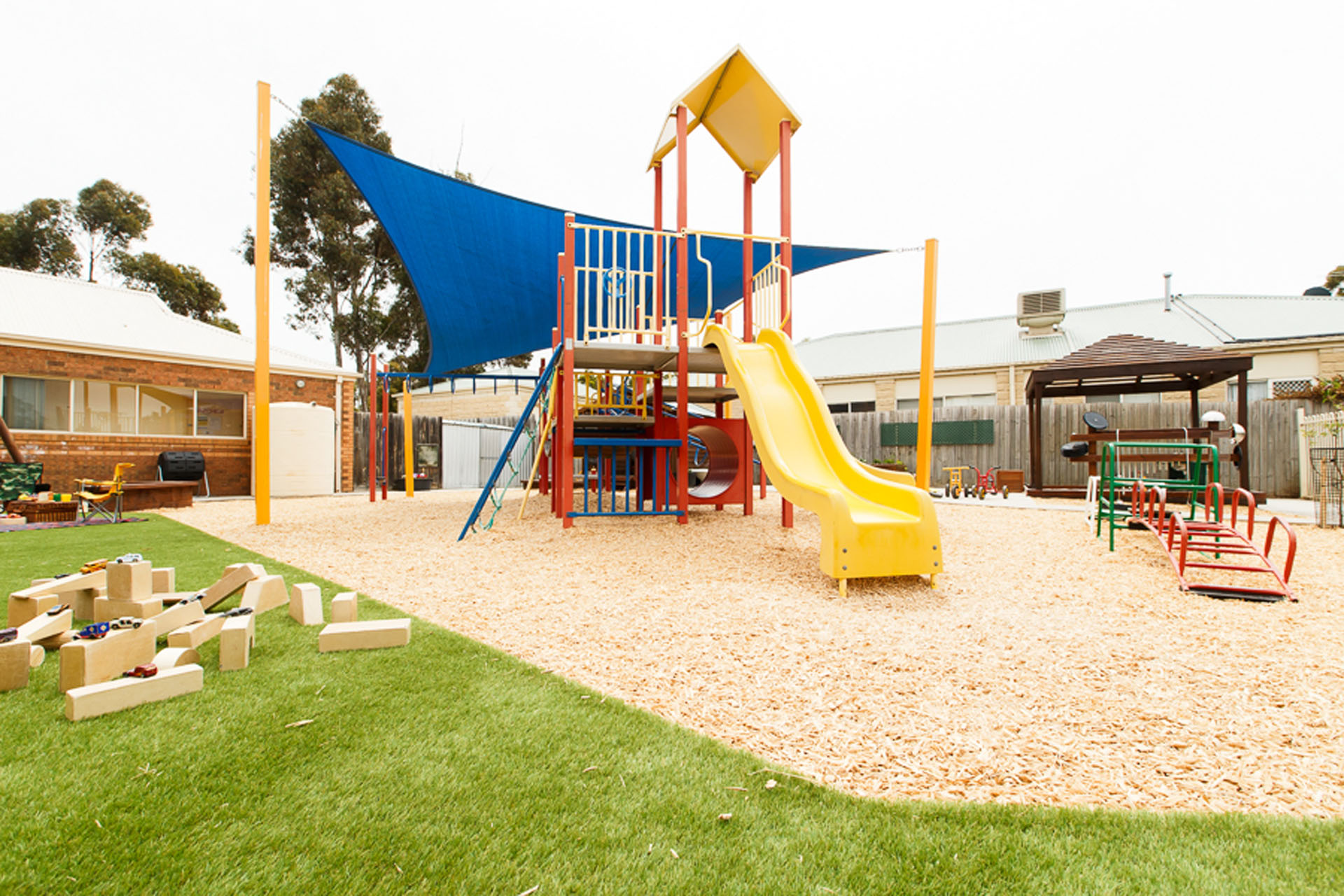
At Aussie Kindies, being outdoors and hands-on in nature isn't an extra, it's core to how we think about early learning. Our centres are set up to give kids real access to the natural world: gardens to dig in, natural materials to build and create with, spaces to run and climb and get thoroughly muddy.
We love loose parts - logs, rocks, tyres, crates, mud, water, sand. These kinds of open-ended natural materials invite children to invent, problem-solve, and take physical risks in ways that a fixed plastic playground simply can't match. There's no single right way to use a log or a pile of dirt, which means children are constantly making decisions, testing limits, and figuring things out for themselves.
Our educators are there, watching, supporting, knowing when to step in and when to step back. They're trained to think about benefit alongside risk: to ask not just "could this go wrong?" but "what does this child gain from this experience, and what do they lose if I take it away from them?" That shift in thinking makes a real difference to how outdoor time feels and what kids get out of it.
And because the Lifelong Learning Curriculum runs through everything we do, outdoor play and physical challenge are woven into how we plan and programme, from babies exploring grass and bark for the first time, through to preschoolers managing complex team games and genuine physical challenges.
How to bring more of this home
You don't need a bush block or a purpose-built adventure playground. Some of the best risky play happens in the most ordinary places.
- Let them climb - the tree in the backyard, the rocks at the beach, the equipment at the park. Stay close, but hold back on the "be careful" until it's actually needed.
- Get into the garden - give kids real tools, real dirt, real plants. Digging, planting, watering, watching things grow (and sometimes accidentally destroying them), all of it is valuable.
- Embrace the mess - mud kitchens, puddle jumping, building things with sticks and leaves and whatever's lying around. The sensory experience of unstructured outdoor play is genuinely hard to replicate indoors.
- Let them struggle a bit - when your child is stuck on something physical or social, pause before you solve it. The working-out process is often where the learning lives.
- Go out in all weathers - a bit of cold or drizzle isn't a reason to stay inside. Kids who play outdoors in all conditions develop a physical toughness and environmental confidence that fair-weather play doesn't build.
A word on "be careful"
Research on how adults communicate risk to children suggests that phrases like "be careful" are so frequently used they lose meaning, and can actually increase anxiety rather than reduce it. Instead of "be careful," try: "Can you feel how high that is?" or "What's your plan for getting back down?" These kinds of questions invite children to think for themselves rather than simply feeling nervous.
It takes a bit of practice, but it shifts the dynamic from adult-as-traffic-controller to adult-as-thinking-partner, which is exactly the kind of relationship that builds confidence over time.
Trust your kids a little bit more
When risk is removed from children's play, so too are the opportunities to develop independence and confidence. Kids need chances to judge their own abilities, make decisions, and sometimes fail in safe environments.
At Aussie Kindies, we believe children are genuinely capable, of more than we often give them credit for. Getting muddy, falling off things occasionally, negotiating disagreements with friends, figuring out a physical challenge that looks too hard - these are all part of growing up well. We're here to make sure the environment is safe enough for that to happen, and experienced enough to know when to let it run.