

Have you ever watched your child stand on the edge of a game, waiting to see if they’ll be invited in?
Maybe they jump straight in confidently. Maybe they hang back. Maybe they try... and it doesn’t go to plan.
As parents, those moments can tug at the heart.
But here’s something comforting: those small social experiences are exactly how resilience grows.
For children aged 2-5, resilience isn’t built through big life lessons. It’s built through everyday play - through sharing, waiting, disagreeing and trying again. And friendships are at the centre of it.
What resilience looks like in early childhood
Resilience at this age doesn’t mean never getting upset.
It means:
- coping when something feels unfair
- recovering after disappointment
- asking for help
- returning to play after conflict
- trying again tomorrow
The Harvard Center on the Developing Child explains that resilience develops through supportive relationships that help children manage stress and big feelings.
In other words, resilience grows when children feel safe, and when they have chances to practice social skills with others.
Why friendships matter so much
Between the toddler years and preschool, children begin to move from playing side-by-side to truly playing together.
They start learning how to:
- take turns
- share materials
- use words instead of grabbing
- understand how someone else feels
- solve small disagreements
The Raising Children Network highlights that friendships help children build cooperation, empathy and communication skills, all important for emotional wellbeing.
But friendships also give children something even deeper: A sense of belonging.
When children feel like they are part of a group, they are more willing to try new things, bounce back from setbacks and build confidence.
Belonging builds resilience.
When friendships feel tricky
If your child struggles with sharing…
If they get upset easily during play…
If they prefer to play alone sometimes…
You are not alone. Social skills take time.
Some children are naturally outgoing. Others are slower to warm up. Both are completely normal.
What matters is that children have gentle guidance and regular opportunities to practice social interactions in a supportive environment.
No one expects toddlers or preschoolers to get it right every time. They’re learning.
The resilience lessons hiding in everyday play
Those “big feelings” moments are doing important work.
- When a child waits for a turn, they’re building patience
- When they negotiate roles in a game, they’re building flexible thinking
- When they argue and then reconnect, they’re learning that relationships can be repaired
- When they feel disappointed and try again, they’re strengthening coping skills
This is resilience in early childhood. It doesn’t always look calm. But it is important.
How Aussie Kindies supports social development
At Aussie Kindies, we know social skills don’t just happen by accident.
Our educators stay close during play, guiding children to:
- use words to express feelings
- practice turn-taking
- solve problems together
- understand how others might be feeling
- rebuild friendships after conflict
We create warm, welcoming environments where children feel secure enough to take social risks, like asking to join in or speaking up when something feels unfair.
Those everyday moments are part of building confident, capable little learners.
You can learn more about our preschool and kindergarten programs here.
Simple ways to build resilience at home
You don’t need to organise perfect playdates or step in at every wobble.
Small things help.
Give them simple phrases to practise:
- “Can I play?”
- “Can I have a turn next?”
- “I didn’t like that.”
Keep playtimes manageable
Short and positive often works best.
Acknowledge feelings first
“That hurt, didn’t it?”
Then gently guide problem-solving
“What could we try next?”
That’s how resilience strengthens.
Why this matters for school readiness
When children start preschool or school, teachers aren’t just looking for early reading skills.
They’re looking for children who can:
- work alongside others
- cope when things don’t go their way
- follow routines
- manage frustration
- ask for help
These skills grow directly from early friendships and social play. Learning to be with others is one of the most important parts of preparing for school, and for life.
The takeaway
Resilience isn’t built in big speeches or dramatic lessons.
- It’s built in sandpits.
- On climbing frames.
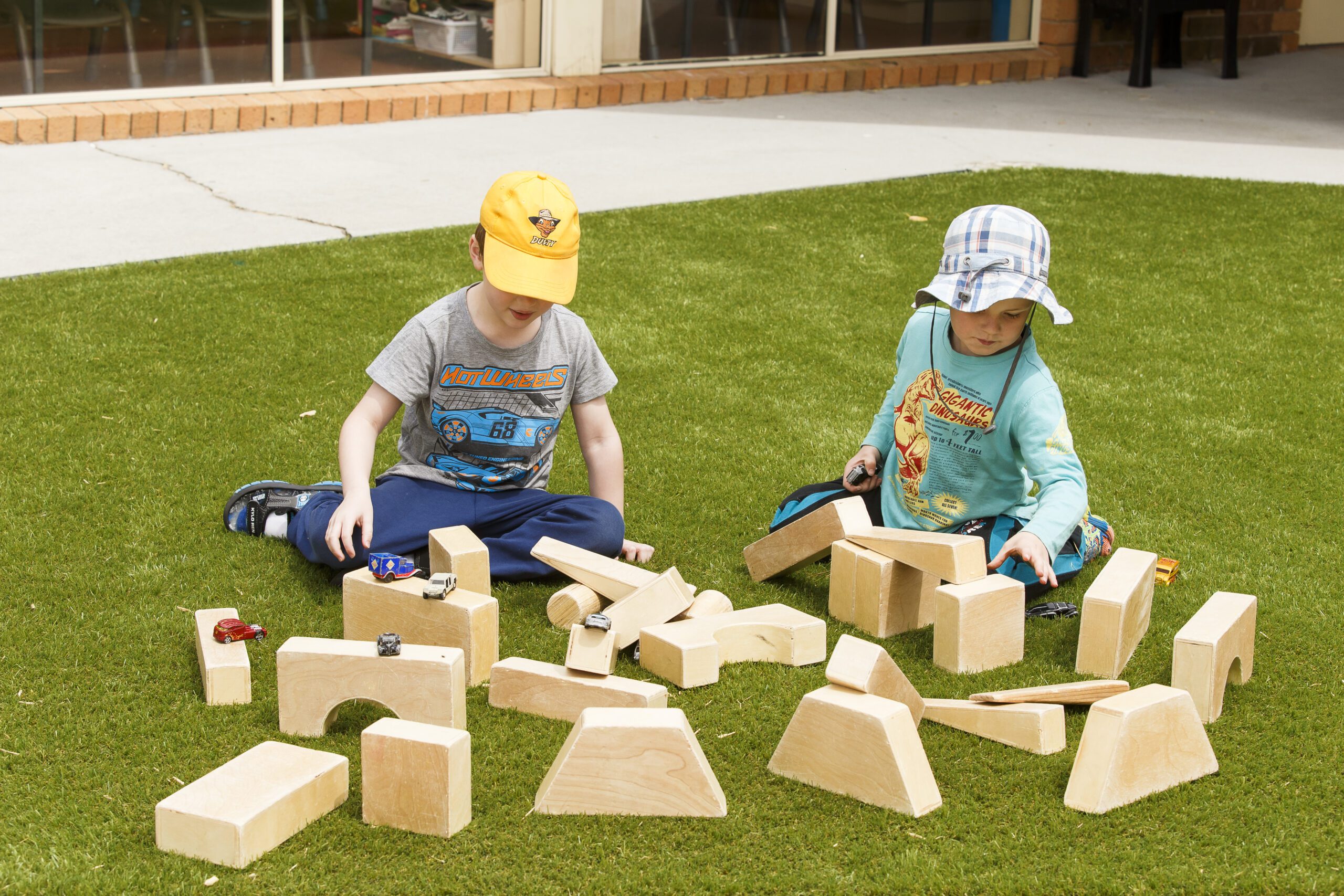
- In block towers that fall over and get rebuilt together.
Every time your child navigates a tricky social moment and chooses to try again, they are building strength that will carry them far beyond the early years.
At Aussie Kindies, we’re proud to support children as they grow socially, emotionally and confidently, one friendship at a time.
If you’d like to find your nearest Aussie Kindies Early Learning Centre and book a tour, you can do so here.