

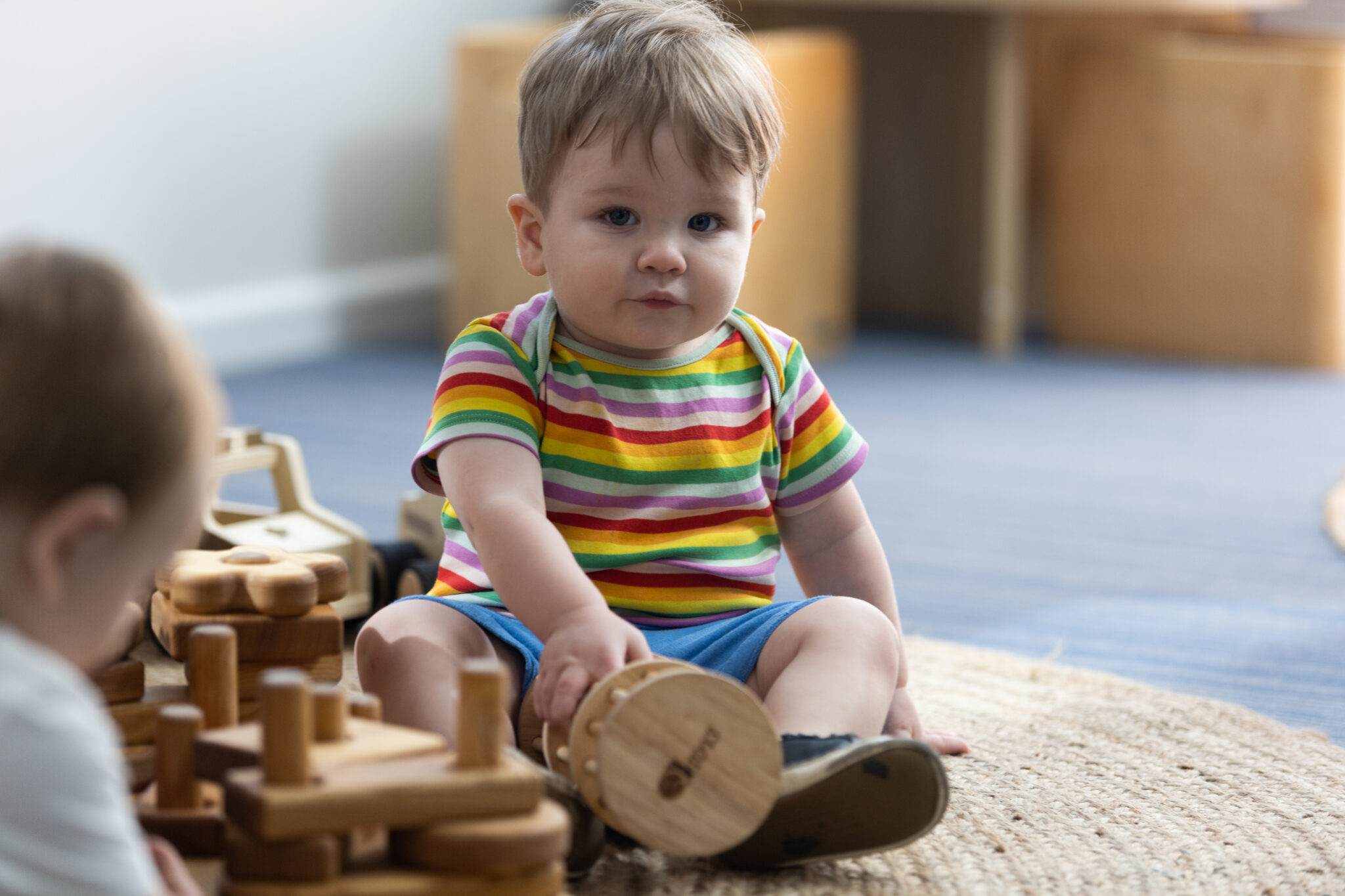

Starting daycare is a big deal, for your little one, and honestly, for you too. It's completely normal to wonder what's actually going on behind the scenes.
Why does settling in take longer than you'd think? Why does your usually chilled-out toddler seem like a totally different kid at pick-up? Why does that goodbye at drop-off hit so hard? And is all of this actually worth it in the end?
Turns out, there's some solid research behind all of it. And once you know what's going on, the whole thing feels a lot less stressful, and a lot more worth it.
Why It Doesn't Happen Overnight
Attachment research tells us trust with a new educator builds up slowly, through the same good experiences happening again and again. It's not something that clicks into place on day one.
That's why most kids take a few weeks, not a few days, to properly settle in. A dicey first fortnight doesn't mean anything's gone wrong, it just means your little one is doing exactly what kids are wired to do: figuring out who they can trust.
Our Settling In guide runs through what to expect during this stretch, and how our educators help your family through it.
Why Your Kid Might Be a Little Angel at Care and a Handful at Home
Loads of parents are surprised to hear their calm, independent-at-daycare kid turns into a clingy little koala the second they walk in the door at home, or the other way round.
Psychologists call this context-dependent behaviour, and it's totally normal. Kids, just like grown-ups, act a bit differently depending on where they are and who they're with. It's not a red flag either way, it just means your child is learning to handle different environments, which is a pretty handy life skill.
Why That Goodbye Hits Different
Research on secure attachment points to something dead simple: a warm, unhurried, no-drama goodbye helps kids feel safe, even when it's genuinely hard in the moment.
Raising Children Network's guide to separation anxiety backs this up - tears at drop-off actually mean your child has a strong, healthy bond with you. It's not a sign anything's wrong.
A quick, confident goodbye gives your child something predictable to hang onto. Over time, that's exactly what builds their confidence that you'll always come back. Moving rooms too? Our Transitioning page has a few extra tips.
What Our Educators Are Quietly Keeping an Eye On
Our qualified educators are trained to clock the small stuff - a change in appetite, a shift in play, a quieter arvo - well before it'd register as anything to worry about.
That's part of what sits behind our ratios, our qualifications, and the Lifelong Learning Curriculum: not just structured learning, but educators who genuinely know your kid as an individual.
Does Early Learning Actually Make a Difference? Here's What the Research Says
Fair question, especially if Nan or Pop are side-eyeing the whole daycare thing: does quality early learning actually make a real difference?
Short answer: yes. According to the Australian Institute of Health and Welfare, kids who went to some form of early learning were considerably less likely to be developmentally behind when they started school, compared to kids who hadn't been at all. The same report also points to long-term research on Aussie kids that found a real link between time spent in quality preschool programs and better academic results in the early years of primary school.
This isn't about pushing your kid to grow up faster. It's that the first five years are when the brain is building the big stuff - language, self-control, social skills - faster than at any other point in life. Quality early learning, with qualified educators and a real curriculum, is built to make the most of that window.
The Rest of the Family's Along for the Ride Too
Grandparents, aunties, and family friends are often just as invested in your little one's early years, even from a bit further back. Worth filling them in on what you're learning - daycare looks pretty different to how it did a generation ago, backed by a lot more research than there used to be.
Daycare today isn't a replacement for family time, and it's not one-size-fits-all. It's a genuine add-on to what happens at home - hands-on play, plenty of chat, and learning to get along with others, guided by qualified educators, alongside the biggest influence on your kid's world - you and the rest of the family.
The Bottom Line
None of this means you need to change a thing, it just means you can relax into the process a bit more, on both fronts.
Settling in takes time because that's how trust actually gets built. Acting differently at home versus care is a good sign, not a bad one. And choosing quality early learning? The research has your back.